Quotes6 min
How to read a roofing quote, line by line
Two quotes for the same roof can describe two completely different roofs. Here is every line that should be on the page, and what it means when one is missing.
Redacted for privacy
Estimator

Ignore the bottom of the page first — Two quotes for the same house can sit within a rounding error of each other and describe two different roofs. Everything that decides whether the roof lasts is in the middle of the document, in the lines most homeowners skim. Read those first and the comparison mostly makes itself.
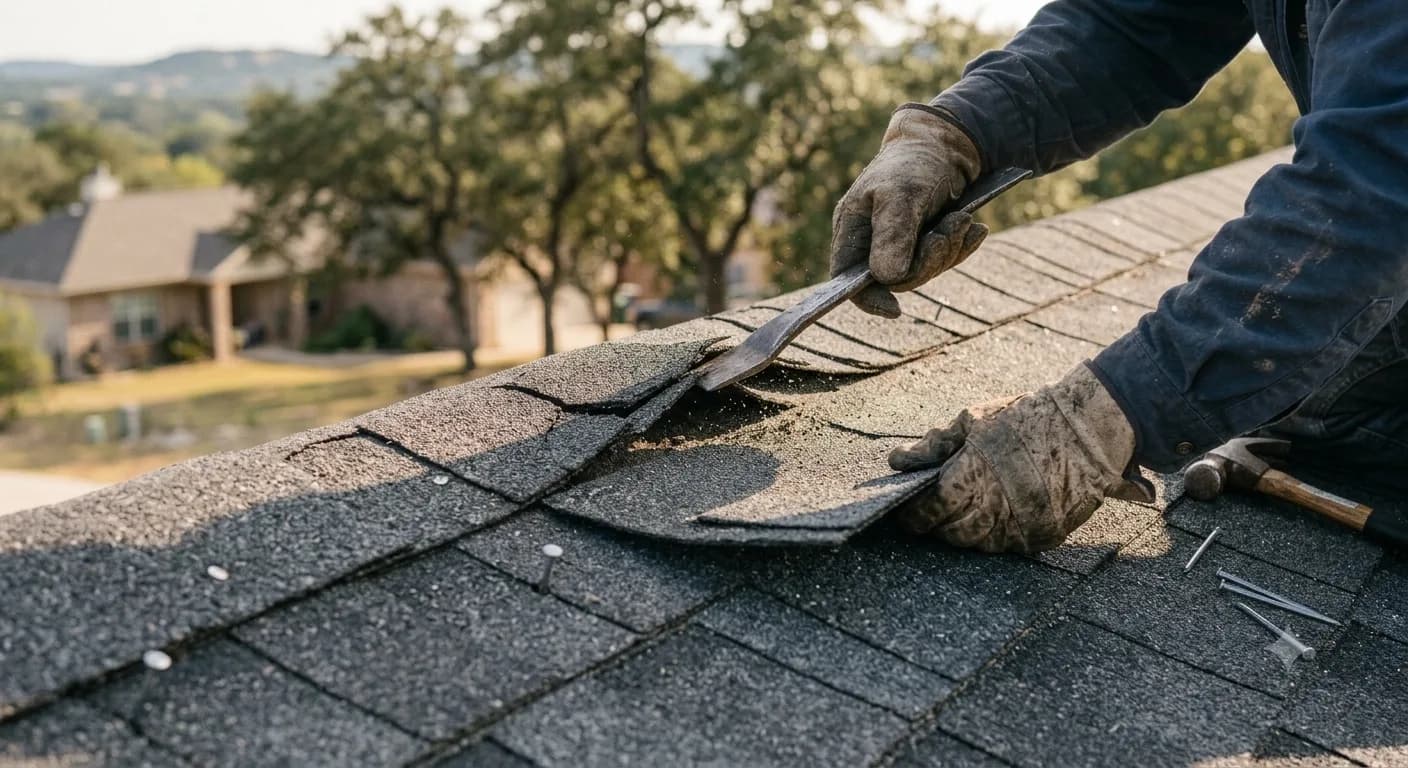
Tear-off — It should say tear-off to bare deck, and it should say how many layers are coming off. If a quote offers to lay new shingles over the old ones, that is not a saving. A second layer hides the decking from everyone, cooks the new shingles from underneath, voids most manufacturer warranties, and doubles the work of the next tear-off. We do not do it.
Decking — The one line that separates an honest quote from an optimistic one. Nobody knows the state of your plywood until the old roof is off, so the quote cannot include the true figure. What it can do is name the material — half-inch plywood, not chipboard offcuts — and say that replacement is quoted per sheet, photographed and approved by you in writing before it goes in. A quote that never mentions decking is not cheaper. It is incomplete, and the difference turns up as a change order on day one.
Underlayment — Ask what it is. Synthetic across the field is the standard now. The line that matters more is ice-and-water shield: a self-adhered membrane that goes at the eaves, in the valleys and around penetrations, where water sits longest and wind pushes it uphill. It should be named, and the quote should say where it goes rather than just listing it.
Drip edge — Cheap, quick, and left off constantly. It has to be under the underlayment at the eave and over it at the rake. Get the eave backwards and water runs behind the gutter and rots the fascia. If drip edge is not on the page, ask whether it is being installed at all.
Flashing — Look for the word "new". Reusing old step flashing is a way to save an hour and buy a leak. At a sidewall it should be step flashing, one piece per shingle course, tucked behind the siding — not a length of L-metal run up the wall and caulked. At a chimney, counter-flashing should be cut into the mortar joint, not surface-sealed. Pipe boots should be new, every one of them, on every job.
Ventilation — The quote should say what the exhaust is and how much intake feeds it. Ridge vent needs vented soffit below to work; without intake, a ridge vent pulls its air out of your house. A quote that adds exhaust vents without counting intake is selling you hardware, not airflow.
Nailing — Four per shingle is the code minimum. Six is what the manufacturer requires for an enhanced wind rating, and it is what hail country deserves. If the quote is silent, ask, and ask whether the fasteners land in the common bond rather than high on the shingle.
Cleanup and haul-away — Dumpster on the driveway, tear-off gone the same day, magnets over the yard. It should be in the scope, not an optional line.
Warranties, both of them — Two exist. The manufacturer's, on materials, which is worth little unless the contractor registers it — ask whether they will, and ask for the certificate. And the contractor's, on workmanship, which is the one that answers when a valley leaks in year four. Get the length, the coverage and whether it transfers if you sell.
The tell — A quote that names the shingle line, the underlayment, the flashing details, the vent count and the decking terms was written by someone who intends to install all of it. A single line reading "new roof" was written by someone who has not yet decided. Book a free inspection and you will get the long version, with photographs, whether or not you hire us.