Insurance7 min
How a Texas hail claim actually works
What your policy covers, what the adjuster is scoping, what a supplement is, and the mistakes that turn a good claim into a denied one.
Redacted for privacy
Claims & supplements

What a policy covers, and what it does not — Most Texas homeowner policies cover sudden storm damage: hail, wind, falling limbs. They do not cover age, wear, or a roof that has simply run out of years. Every claim turns on that line. A good damage report draws it clearly and shows it, with photographs of bruising and dated storm data, rather than arguing about it.
Before you call anyone — If it is safe, photograph the day of the storm. Hail on the ground next to a coin for scale, dented gutters and downspouts, screens, the AC fins, anything in the yard. Dated photographs from the day are the strongest evidence a claim will ever have, and nobody can take them for you later.
Get on the roof before you file — Have a local contractor inspect first. Filing starts a clock and assigns an adjuster, and you want to walk into that meeting with a photo report rather than a hunch. If there is no real damage, you have also avoided filing a claim that sits on your record for nothing. We will tell you when the roof is fine; it happens often after a storm everyone was worried about.
Filing — Texas policies require prompt notice, and most carriers want the claim inside a year of the date of loss. Do not sit on it while you think about it. File with your policy number, the storm date, and the inspection report attached.
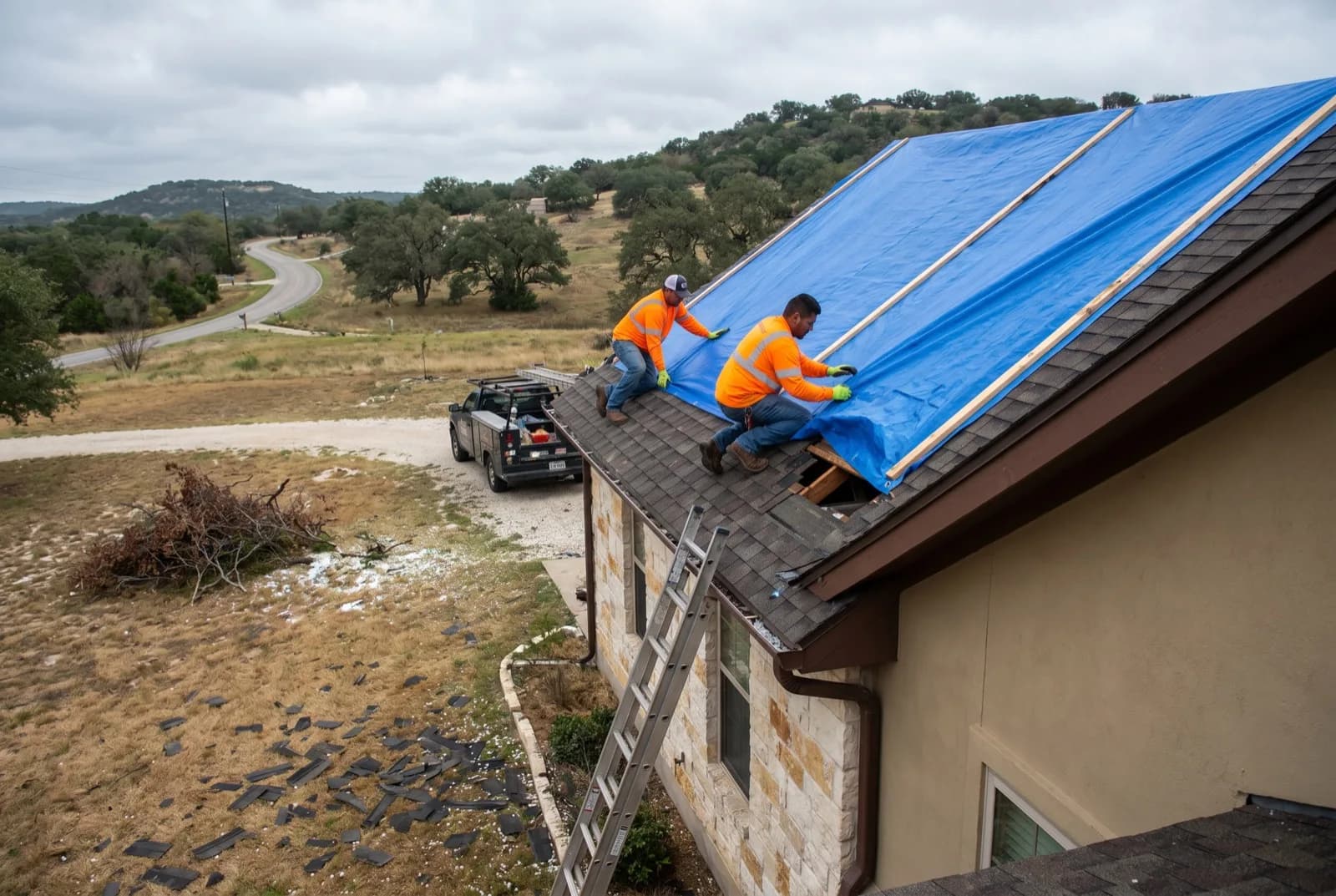
The adjuster meeting — The adjuster walks the roof and writes their own scope. Have your contractor there, on the roof, at the same time. When our estimator meets an adjuster with measurements and a photo set in hand, the two scopes usually agree by the end of the visit, and agreeing scopes are what makes a claim move quickly. That is the honest version: it speeds things up. We cannot promise what a carrier will approve, and anyone who does is telling you a story.
Reading the settlement — You will normally see two figures. Actual cash value is the depreciated amount released now. Recoverable depreciation is the rest, released once the work is complete and invoiced. On a replacement cost policy your out-of-pocket is usually the deductible, which no contractor may lawfully waive, rebate or absorb.
Supplements, in plain English — An adjuster writes from a walk and a software template, so first scopes routinely miss things: ridge vent, drip edge, a second layer discovered at tear-off, code-required upgrades, steep or two-story access. A supplement is a documented request to add those, with photographs and measurements behind each line. Most of our claims involve at least one. Some are approved in full, some in part, and occasionally none of it is, which is why we document rather than promise.
The mistakes that sink claims — Waiting a year to file. Repairing the roof before anyone documents it. Signing an assignment of benefits with a door-knocker, which hands them your claim. Accepting the first scope with nothing of your own to compare it against. And letting someone talk you into filing when there is no damage.
One rule — The homeowner with a dated photo report has a different claim experience to the homeowner with an opinion. Get the inspection first; it is the cheapest and most useful step in the whole process.